Bed load vs suspended load: reading which one built the bar
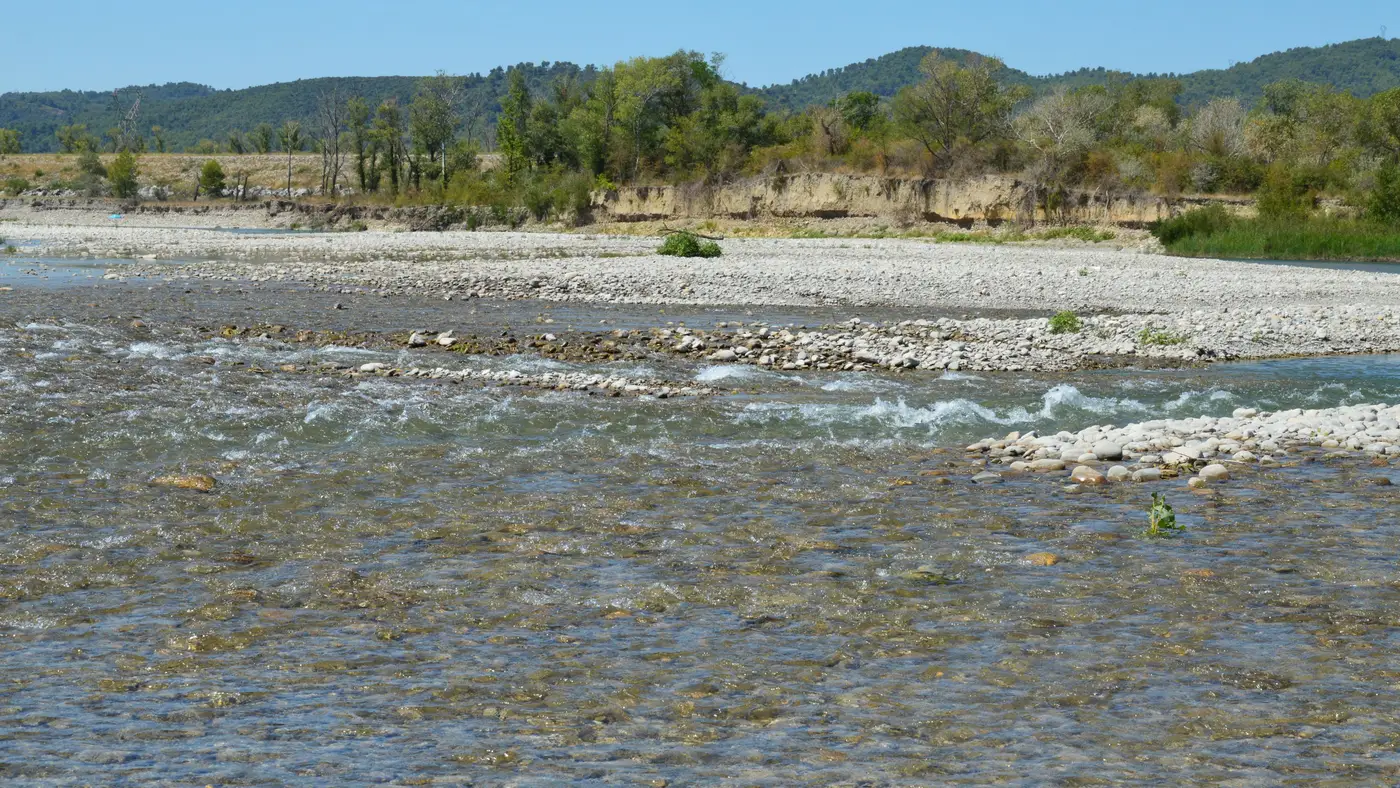
A crew walks out to a bar two weeks after a flow spike and the question on everyone's mind is the same: did this thing get rebuilt by traction, or did it just get draped? The answer changes what you do next. A bar that moved by bed load tells you something about competent flow and channel capacity. A bar that's mostly a fines cap tells you the event was long and the water column was loaded, but the bed itself barely budged. Mixing those up skews your read on channel stability for the next few years.
Start with grain size, not volume
The fastest tell is what's sitting on the surface. Bed load deposits are coarser than the parent material upstream, often imbricated, with clasts shingled and leaning downstream like roof tiles. That shingling only happens when particles roll and hop along the bed under traction, which means the flow crossed the critical shear stress for that grain size, the threshold hydraulic engineers call competent flow. If you're seeing cobble or coarse gravel reorganized into a fresh lobe with an armored, open-framework surface, that's traction transport. The water was moving the bed, not just carrying a load over it.
Suspended load leaves a different signature. Fine sand, silt, and clay settle out as the flow wanes, usually as a drape over whatever coarser deposit is already there, or as laminated caps on the bar top and in the lee of obstructions. These deposits are poorly sorted compared to a bed load lag, often with a soft, cohesive texture, and they thin away from the thalweg rather than forming a lobe. If the "new" material on a bar is a few centimeters of mud over an unchanged cobble surface, the bed itself was stable. The suspended fraction was just along for the ride.
Bar morphology gives you the second line of evidence
Lateral and point bars that have shifted position, grown a new head, or had a channel cut through them are bed load signatures. That kind of reworking needs traction transport sustained over the rising limb and peak of the hydrograph. A mid-channel bar that's merely higher than it was, with the same footprint, usually means vertical accretion from suspended sediment settling as the flow dropped, not lateral reworking. Avulsion around a bar, a new chute forming, or a bar splitting into two lobes are all strong bed load tells because none of that happens without the bed material itself moving.
The plume you can see downstream at the time of the event is a suspended load signal, and it's worth tracking separately from the bar. A long, visible turbidity plume into the receiving water tells you fines were in transport, but it doesn't tell you whether the bed moved upstream. You can have a big plume and a bar that barely changed shape, or a modest plume with a bar that's been completely rebuilt. Treating plume extent as a proxy for bed mobility is the mistake that sends crews to the wrong reach.
Why this matters before you schedule a resurvey
None of this replaces a field visit when you need grain counts or a pebble count for a sediment budget. But before you commit a crew, it helps to know which reaches show bed load signatures (new lobes, shifted bar heads, cut channels) and which just got a fines drape. A before/after pair of the reach pulled from satellite imagery right after the event gives you that first cut. Channel outline change and bar shape tell you where the bed moved; plume extent tells you where the suspended load went, and the two often point at different parts of the system.
If you're triaging a long reach after a flow event and need to know which bars actually reworked versus which ones just got a coat of silt, that's the gap River Morphology is built to close.